A well-built gate should swing smoothly, close cleanly, and hold its shape for years. The difference between a gate that lasts and one that quickly sags usually comes down to one thing: proper bracing.
Here are the essentials of diagonal gate bracing, including the differences between wood and metal gate systems.
Why Gates Need Bracing
Unlike fence panels, gates are constantly moving and carrying their own weight through the hinges. Over time, gravity pulls the unsupported corner downward, causing the gate to sag, drag, or fail to latch properly.
A diagonal brace counteracts that force by redistributing the load across the frame.
General Rule: Diagonal Braces
- Braces should run diagonally across the gate frame
- Ideally set at 45 degrees or steeper (more upright)
- Typically made from the same material as the gate frame for consistent strength and expansion
For wide gates, it’s best to:
- Divide the gate into vertical sections
- Brace each section individually using the same diagonal principle
This prevents twisting and adds long-term rigidity.
Wood Gates: Compression Bracing
Wood gates use a compression brace, meaning the brace is designed to push upward against the sagging corner.
Orientation:
- Runs from the bottom hinge side
- Up to the top latch side
This positioning allows the brace to:
- Transfer the weight downward into the hinge post
- Lift the outer (latch-side) corner
If installed correctly, the brace is always under compression when the gate tries to sag, which strengthens the structure.
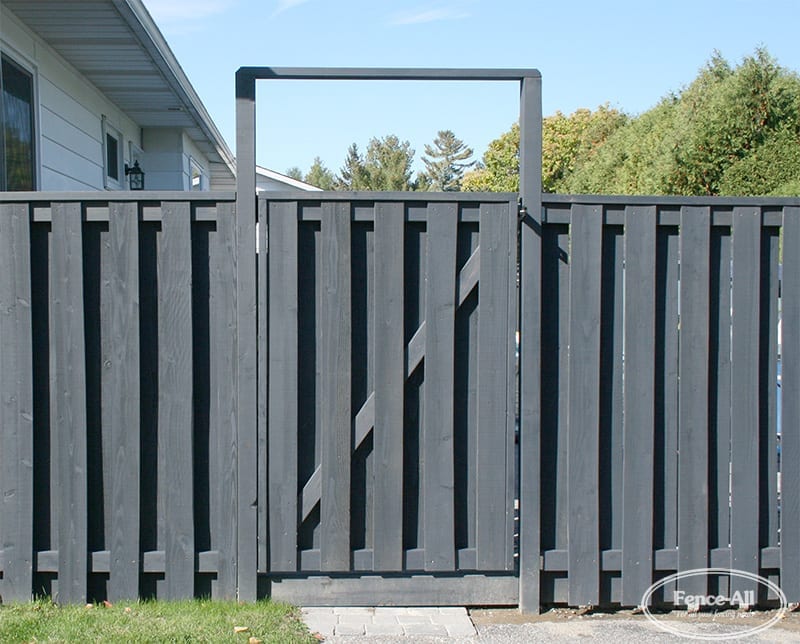
A diagonal wood brace runs from the bottom of the hinge side up to the top of the latch side.
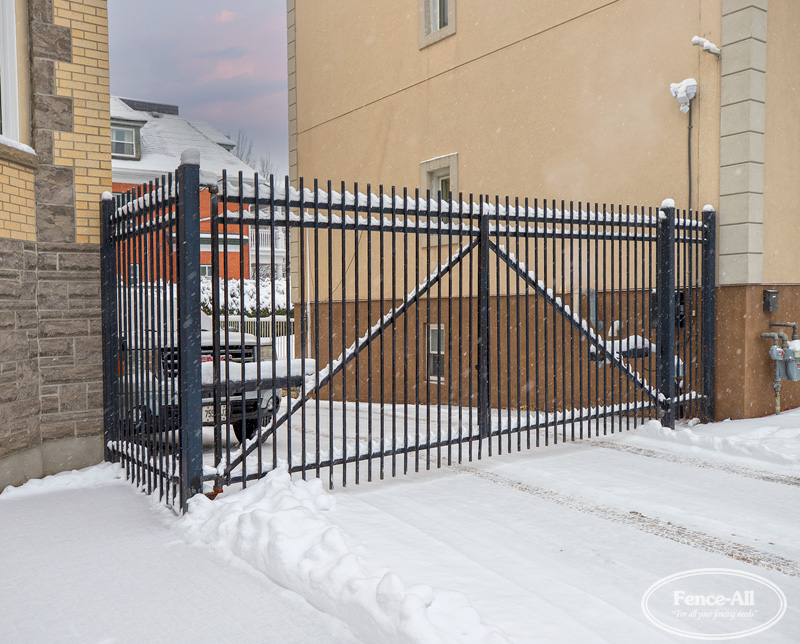
Metal Gates (Commercial Aluminum & Chain Link): Tension Bracing
Metal gates—such as aluminum or chain link—typically use a tension system. This can be a solid piece welded into the gate frame or a cable and turnbuckle assembly.
Orientation:
- Runs from the top hinge side
- Down to the bottom latch side
This setup works by:
- Pulling the lower corner upward
- Keeping the frame square through adjustable tension
Unlike wood, metal frames don’t rely on compression members—they depend on adjustable tension to maintain alignment over time.
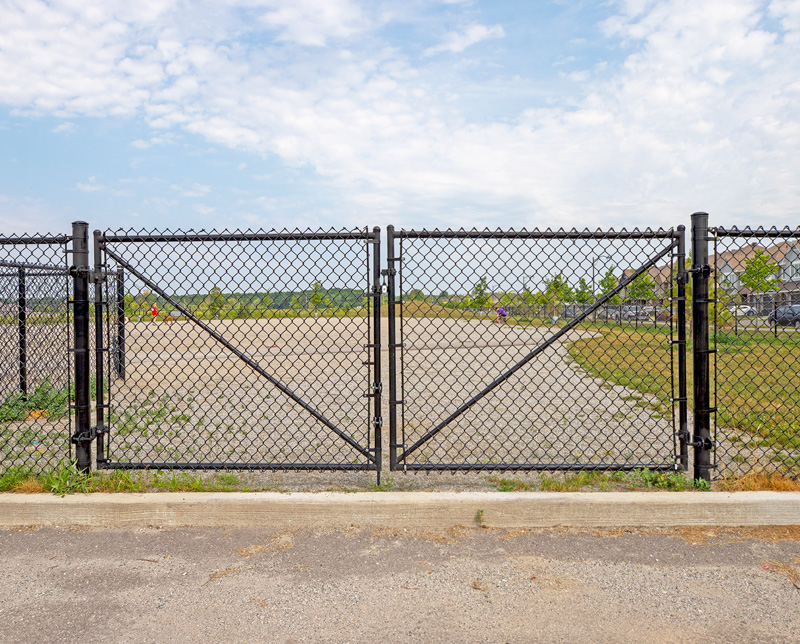
Diagonal chain link braces run from the top of the hinge side down to the bottom corner of the latch side.
Key Takeaways
- Aim for a 45° angle or steeper
- Match brace material to the gate frame
- Use compression braces for wood gates
- Use tension systems for metal gates
- For wide gates, section and brace each part
Questions?
If you have questions about fencing or gates give us a call at (613) 736-1122. We’d love to hear from you!